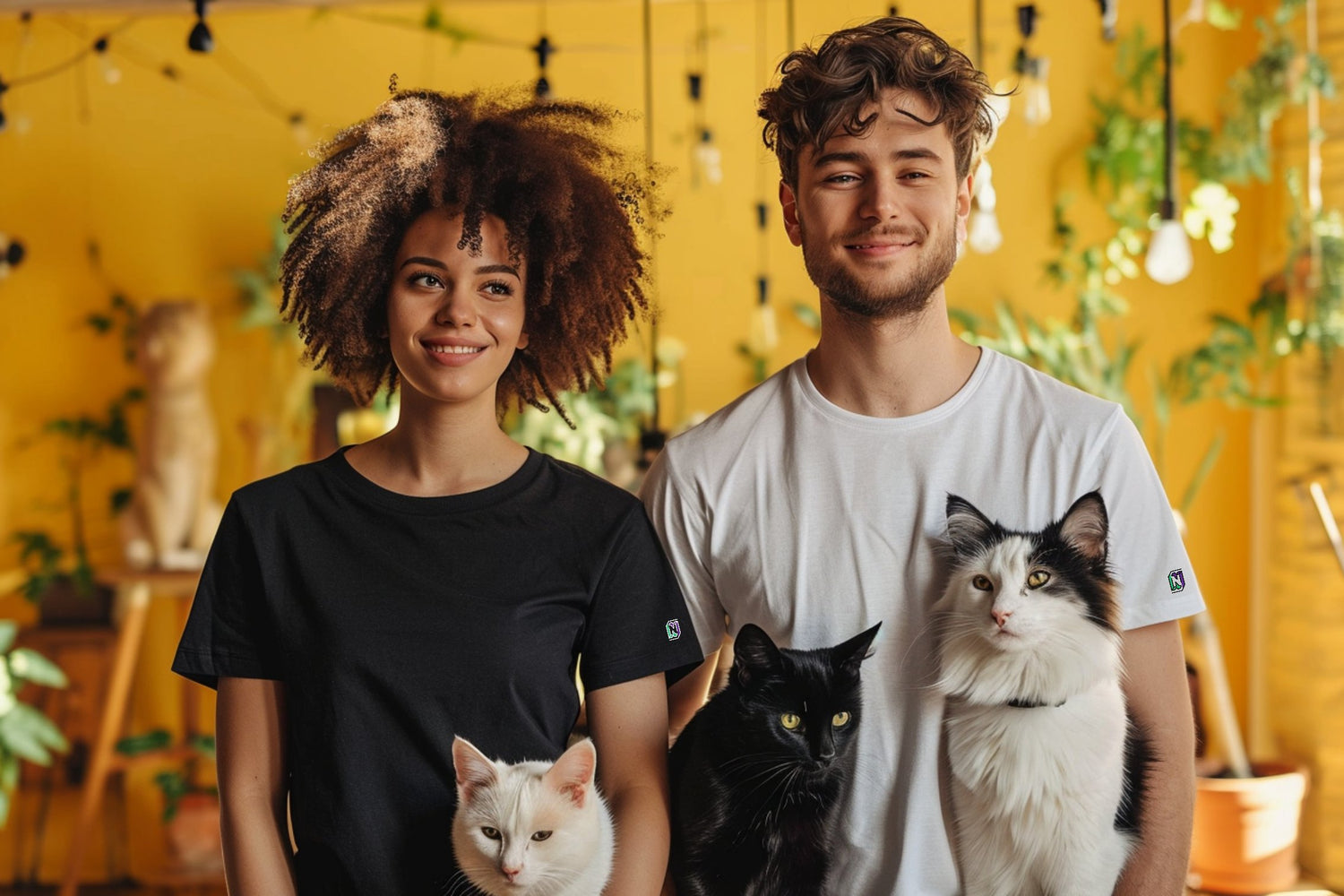


If your dog follows you from room to room, your cat insists on sitting on your laptop, or your pet somehow manages to occupy the exact spot you were about to sit in, you’re definitely not alone.
For many pet parents, having a furry shadow is simply part of everyday life.
But why do our pets want to stay so close to us? And why can that closeness become even more important as dogs get older?
Here are some useful — and very relatable — facts about the bond between pets and their people.
1. Your Dog May Actually See You as Part of Their Social Group
Dogs are naturally social animals.
They often look to the people they live with for companionship, routine, safety, play, food and guidance.
That’s one reason your dog may follow you from the bedroom…
to the kitchen…
to the bathroom…
and then back to the kitchen again. 😂
Social Fun Fact:
Dog: “Where are we going?”
You: “Three feet away.”
Dog: “Perfect. I’m coming.”
For many dogs, simply being near their person is rewarding.
2. Cats Can Be Much More Social Than Their Reputation Suggests
Cats often get labeled as independent, but many cats form very strong attachments to their people.
Some express that bond by sitting nearby rather than directly on you.
Others apparently believe your chest, lap, keyboard and freshly folded laundry were specifically designed as cat beds.
Cats may seek familiar smells, warmth and comfortable resting places — and their favorite human frequently provides all three.
Cat Parent Reality:
Buy your cat a $70 luxury bed.
Your cat:
“Thank you. I’ll sleep in this cardboard box beside you.”
3. Pets Learn Our Daily Routines Surprisingly Well
Ever notice your dog waiting near the door shortly before your usual walk?
Or your cat appearing in the kitchen at almost exactly the same time every evening?
Pets can become very familiar with recurring patterns in the household.
They may associate particular activities, sounds and environmental cues with things that matter to them — meals, walks, playtime or your return home.
Which means your pet probably knows more about your schedule than you think.
And possibly more than you do.
4. Small Pets Often Love Being Physically Close
Many small dogs and cats naturally gravitate toward warm, enclosed spaces.
A lap, blanket or cozy spot beside their person can feel comfortable and secure.
That also explains why some pets seem determined to climb into:
-
Blankets
-
Laundry baskets
-
Tote bags
-
Cardboard boxes
-
Your hoodie
-
Any space that was clearly not designed for an animal
Pet parents know the rule:
If I fits, I sits.
Apparently, this applies to clothing too.
5. Dogs Don't Necessarily Stop Wanting Adventures as They Get Older
One of the interesting things about senior dogs is that their enthusiasm and physical ability don't always age at the same speed.
A dog may still become excited when you pick up the leash even if stairs, jumping or longer walks have become more difficult.
They may still want to:
🐕 Follow you outside
🚗 Go for car rides
🌳 Visit familiar parks
👨👩👧 Stay involved with the family
🏠 Move from room to room with everyone else
Sometimes the desire to participate is still very much there — they just need a little more assistance getting around.
6. Stairs Can Be Much More Demanding Than Flat Ground
Walking across a living-room floor and climbing a staircase require different levels of strength, coordination and balance.
That's why some dogs may move relatively comfortably around the house but hesitate when approaching stairs.
Pet parents may notice a dog:
-
Pausing before the first step
-
Moving more slowly
-
Looking toward their owner before climbing
-
Avoiding stairs they previously used easily
A support harness can sometimes give owners a practical way to provide gentle assistance while allowing the dog to continue using its own legs.
The goal isn't necessarily to carry the dog.
Think of it more like giving them a helping hand.
If a dog's mobility changes suddenly or significantly, however, it's important to speak with a veterinarian.
7. Getting Into the Car Can Become a Surprisingly Big Challenge
Think about how high the back seat or cargo area of an SUV can be compared with a dog's body.
A younger dog might jump inside without hesitation.
For another dog, that same movement can become a major obstacle.
Many pet parents eventually find themselves doing the classic:
“Okay… one, two, three… UP!”
while trying to lift a 60-pound dog into the car.
This is one reason mobility aids such as ramps, steps and support harnesses can be useful tools in a pet-friendly home.
They aren't just about going for walks.
Sometimes they're about keeping dogs included in the activities they already love.
8. Supporting Your Dog Can Be Easier on the Human Too
Pet mobility isn't only about the dog.
Repeatedly bending down and lifting a medium or large dog can be physically demanding for the owner as well.
Trying to pick up a dog directly underneath the stomach or chest can also be awkward.
A properly fitted support harness provides designated handles, giving the owner a more controlled way to assist the dog.
This can be particularly useful during:
-
Stairs
-
Car entry and exit
-
Standing up
-
Short assisted walks
-
Everyday movement around the home
Just remember that even with a harness, people should avoid lifting more weight than they can comfortably control.
9. Sometimes Your Pet Doesn't Need Anything — They Just Want You
There may not always be a scientific mystery behind why your pet follows you everywhere.
Sometimes the explanation is wonderfully simple:
They like being with you.
Pets become part of our routines.
We become part of theirs.
The morning walk.
The evening couch session.
The little face watching while you make dinner.
The dog waiting beside the car.
The cat trying to crawl into your sweatshirt.
Those ordinary moments are often the ones pet parents remember most.
What Does “Supporting Your Pet” Really Mean?
Support can mean very different things at different stages of a pet's life.
For one pet, it means providing a cozy place to curl up close to their person.
For another, it means offering a little extra stability when climbing the stairs.
Both come from the same idea:
helping pets stay involved in everyday life with the people they love.
That idea is also behind two of the products that have become favorites among the NUGGAL community.
The NUGGAL Pet Pouch Hoodie creates a cozy front space where small pets can relax close to their person during everyday moments at home.
And for dogs that need more physical assistance, the NUGGAL Full-Body Dog Lift Harness & Support Sling gives pet parents handles for controlled support during activities such as walking, standing, stairs and getting into the car.
Different products.
Very different purposes.
But one shared goal:
More everyday moments together. ❤️
Which Kind of Pet Parent Are You? 😂
Be honest:
A. My pet follows me everywhere.
B. My pet owns more comfortable furniture than I do.
C. I have changed plans because my pet looked too comfortable to move.
D. My camera roll is approximately 87% pet photos.
E. All of the above.
If you answered E, welcome to the club. 🐶🐱
Share this article with the person who sends you more pet videos than actual messages.
And remember:
Whether they're riding in your hoodie, following you through the house, or getting a little help up the stairs, our pets mostly want the same thing they've always wanted:
to be part of our lives.
Snuggle Freely with NUGGAL. 🐾